Dental Chair Not Going Up in Vancouver Fix It Fast with Expert Troubleshooting Guide
Dental Chair Not Going Up in Vancouver: A Technician’s Field Guide from BioDen
When Dental Chair Not Going Up hits mid day, the fastest way back to a working operatory is to sort the problem into one of four buckets: control input, safety interlock, power, or the lift mechanism. Manufacturer manuals and service libraries consistently frame chair motion this way: controls call for motion , safety features can interrupt it, and the lift system does the actual work.
If you want a pro to take over quickly in Vancouver, BioDen’s repair team can triage Dental Chair Not Going Up from symptom to root cause, then document the fix so it doesn’t repeat.
The short version: if Dental Chair Not Going Up only happens on one control device, start with that device first, including batteries if applicable.
If the issue is paired with an oil leak, unusual pump noise, or repeated safety stops, stop trying it again, make the area safe, and move to a controlled diagnostic.
What Dental Chair Not Going Up usually means in plain language
In the real world, Dental Chair Not Going Up is not a single failure. It is a symptom . The most useful first question is whether any other chair movements still work. Most manufacturer diagnostics follow this same logic: controls first, then safety system, then the lift mechanism itself.
Backrest still moves
If the backrest continues moving but the base does not rise, the problem is often isolated to the base lift path. Common causes include hydraulic valves, solenoids, cylinders, or limit sensors rather than a complete power failure.
Nothing moves at all
If neither the base nor the backrest responds, start by verifying power and confirming that the chair is actually receiving a valid movement command before assuming a mechanical failure.
Remote only issue
If symptom appears only when using a wireless remote, treat it as a control input problem first. Batteries and communication issues are often much more likely than a lift system failure.
Safety precautions before you troubleshoot
Lock out before you begin
WorkSafeBC’s OHS materials describe a standard de energization and lockout approach: identify equipment, shut down, de energize, lock out, and verify. The responsibility for lockout sits with the worker performing the work.
Do it before removing covers
If you’re removing covers or putting hands near moving linkages because Dental Chair Not Going Up, this is the point to lock out, not after.
Electrical work has compliance rules
In British Columbia, electrical work has its own compliance expectations. Technical Safety BC notes that the Safety Standards Act applies to people who install, alter, or maintain electrical equipment, and regulated electrical work generally requires appropriate licensing or authorization.
Avoid informal wiring
Manufacturers also caution against informal wiring work. For example, DCI Edge explicitly calls out using a licensed electrician for wiring.
Maintain infection control during troubleshooting
Infection prevention and control matters during equipment troubleshooting, including barriers, hand hygiene, and disinfecting touch surfaces . BC oral health practice resources frame IPC as a minimum expectation in clinics.
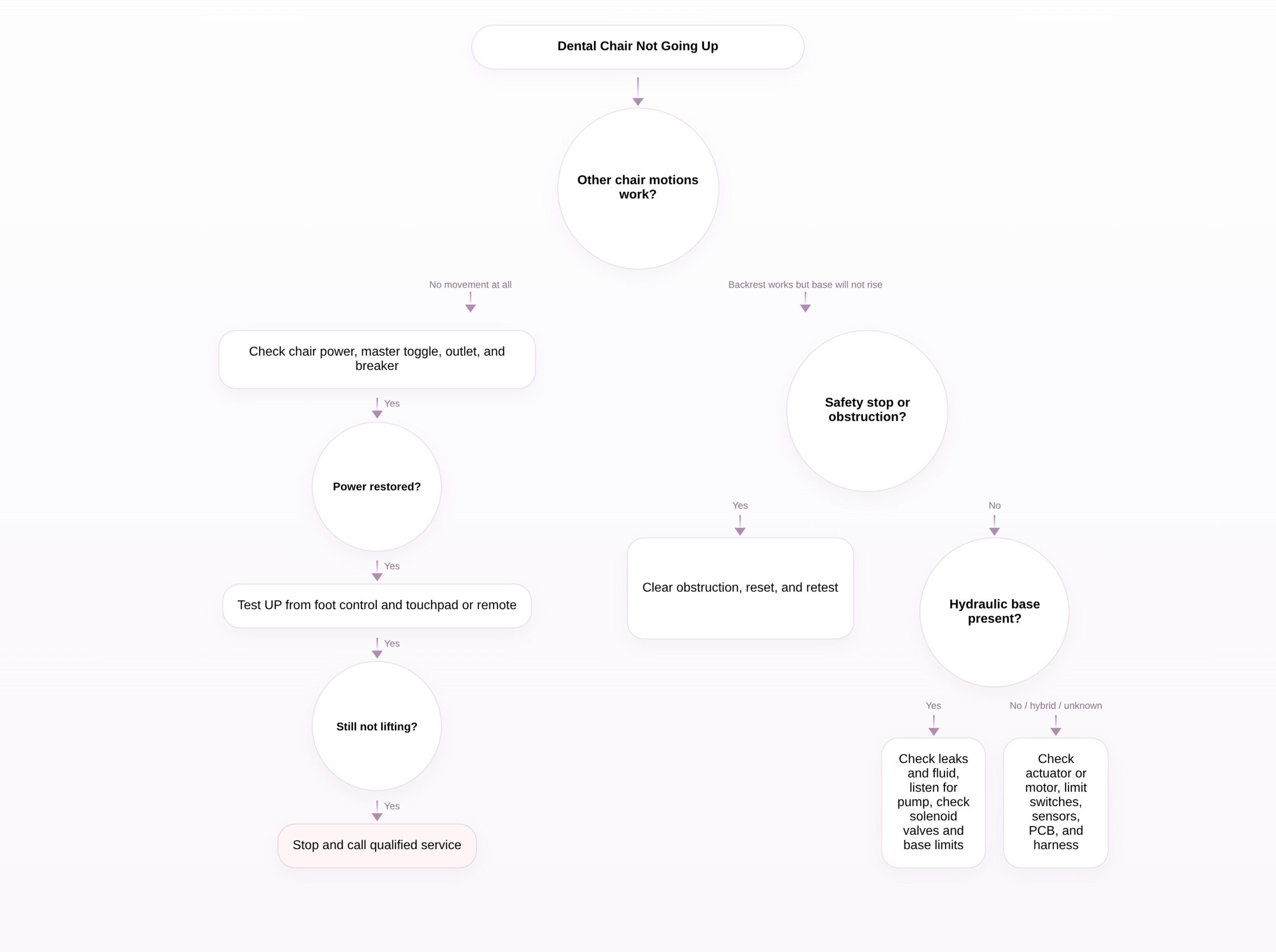
Dental Chair Not Going Up Quick troubleshooting flowchart
This visual guide helps you follow a calm, structured troubleshooting path when a dental chair does not rise, separating control issues, safety stops, power problem, and lift systems faults before they escalate.
Start with control and input checks
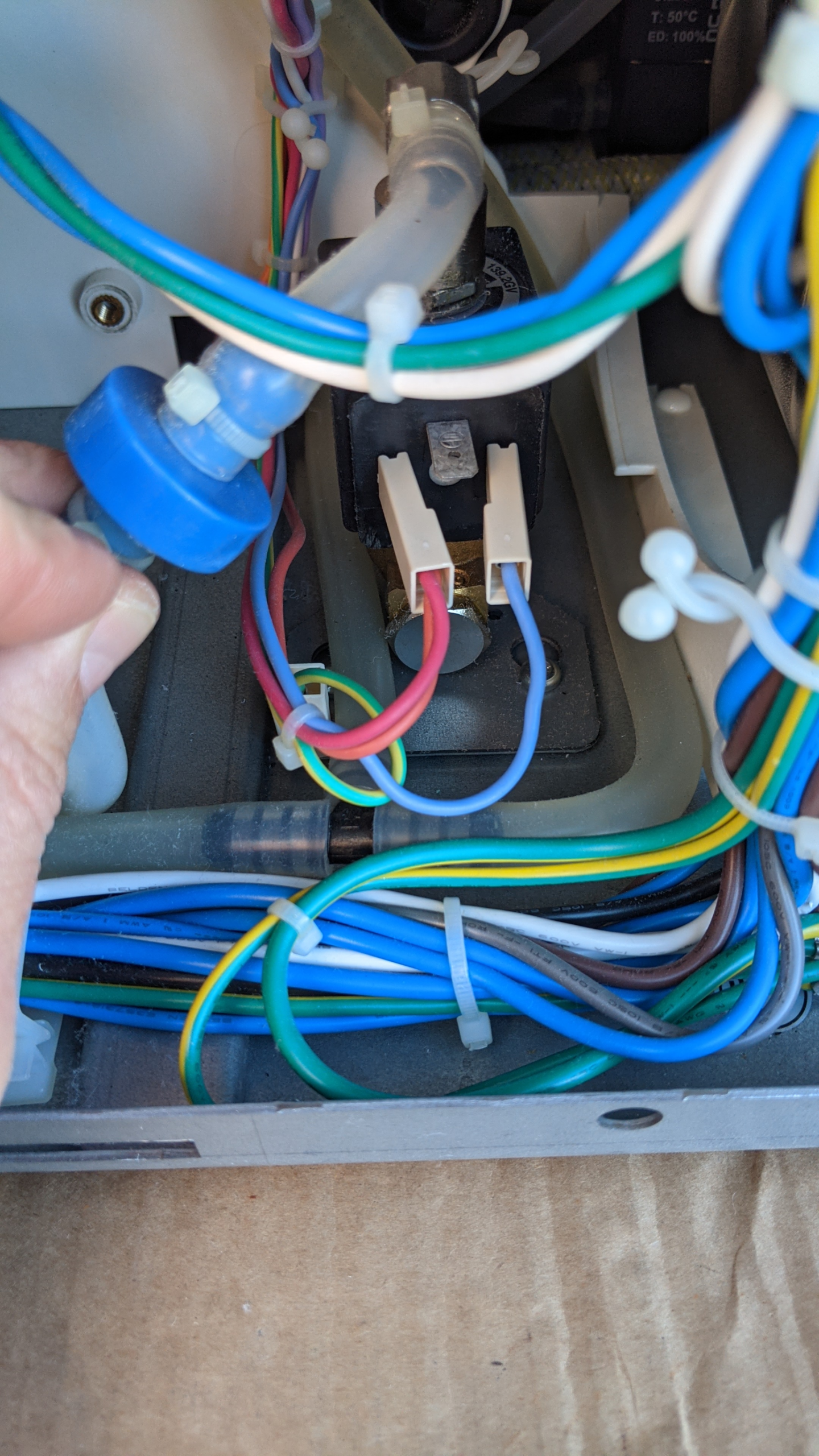
When Dental Chair Not Going Up happens on only one input device, don’t jump straight to hydraulics.
On chairs with multiple control devices, the goal is to answer: “Is the chair receiving a valid UP command?”
If pressing the wireless remote doesn’t cause motion, the Elevance user guide directs battery replacement first, then service troubleshooting.
The A dec 311 and 411 manual shows base up and base down controls on the footswitch and describes system power relationships between the chair power button and the master toggle on attached systems.
DCI Edge’s chair documentation includes explicit electrical hazard warnings and wiring guidance, and its foot pad includes a chair up control area.
Low risk tools that work well at this stage
Tools that work well for this stage include a flashlight, fresh batteries if remote controlled, and a quick visual inspection of the footswitch cord path and connectors. Model specific disassembly is intentionally not covered here.
Stop and call service if you smell burning, see heat damage, or the chair repeatedly trips protection devices. WorkSafeBC’s guidance requires unsafe equipment be removed from service until made safe.
Rule out safety stops and soft limits
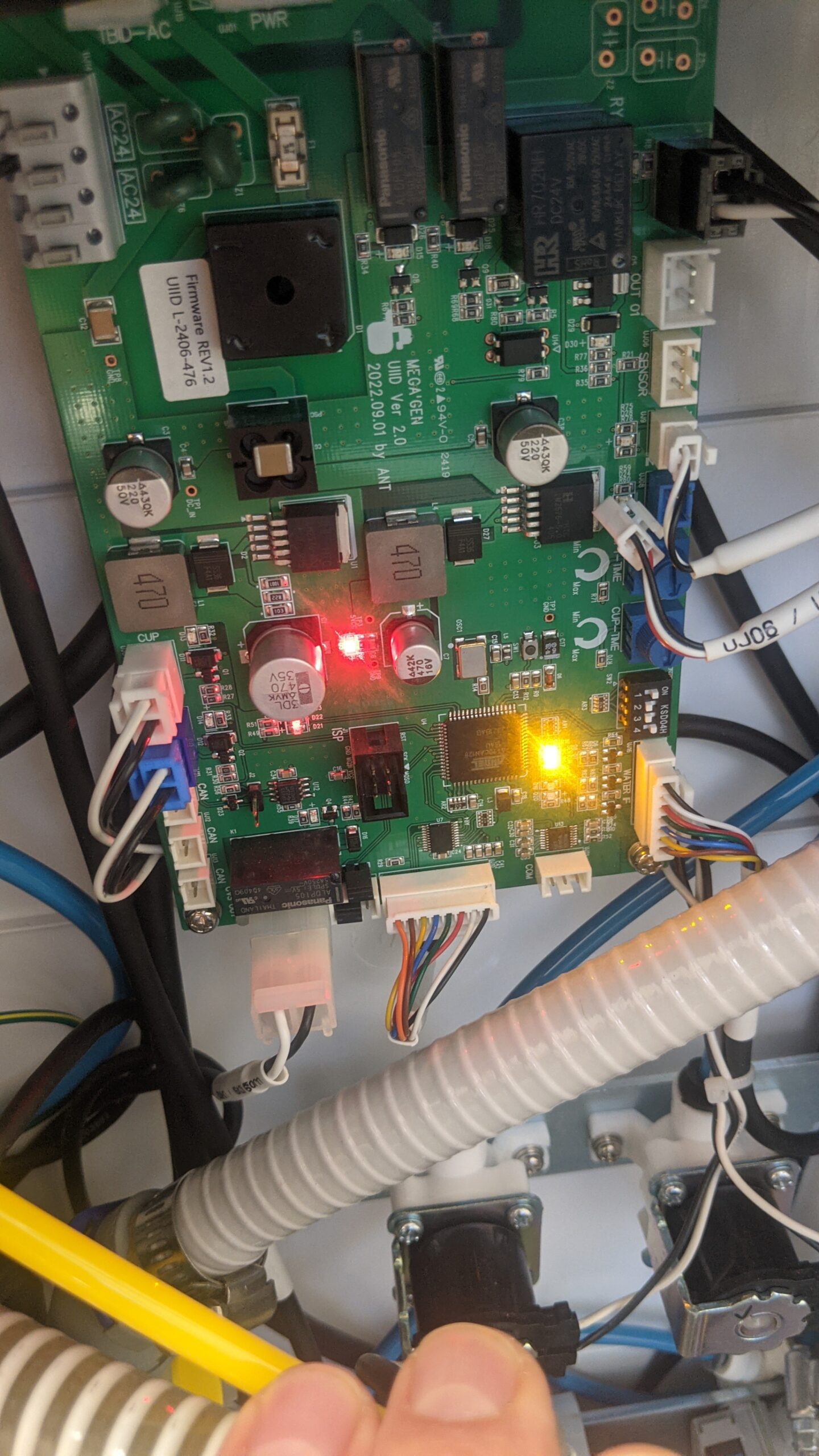
A surprising number of Dental Chair Not Going Up calls are really “the chair did what it was supposed to do.”
A dec describes stop plates and stop switches and notes that activated stop switches may halt the chair or prevent it from moving. The manual guidance is to remove obstructions and correct the condition. It even mentions raising the chair to remove an obstruction after downward movement stops.
Belmont’s documentation shows how some chairs manage upper and lower limits through PCB limit modes and dedicated limit switches. If limits drift or are set incorrectly, the chair can think it is already at its maximum and refuse to go higher, showing up to staff as Dental Chair Not Going Up.
Identify the lift system type
When controls are good and safety stops aren’t the issue, Dental Chair Not Going Up becomes a lift system diagnosis.
You’ll see three architectures in Vancouver clinics:
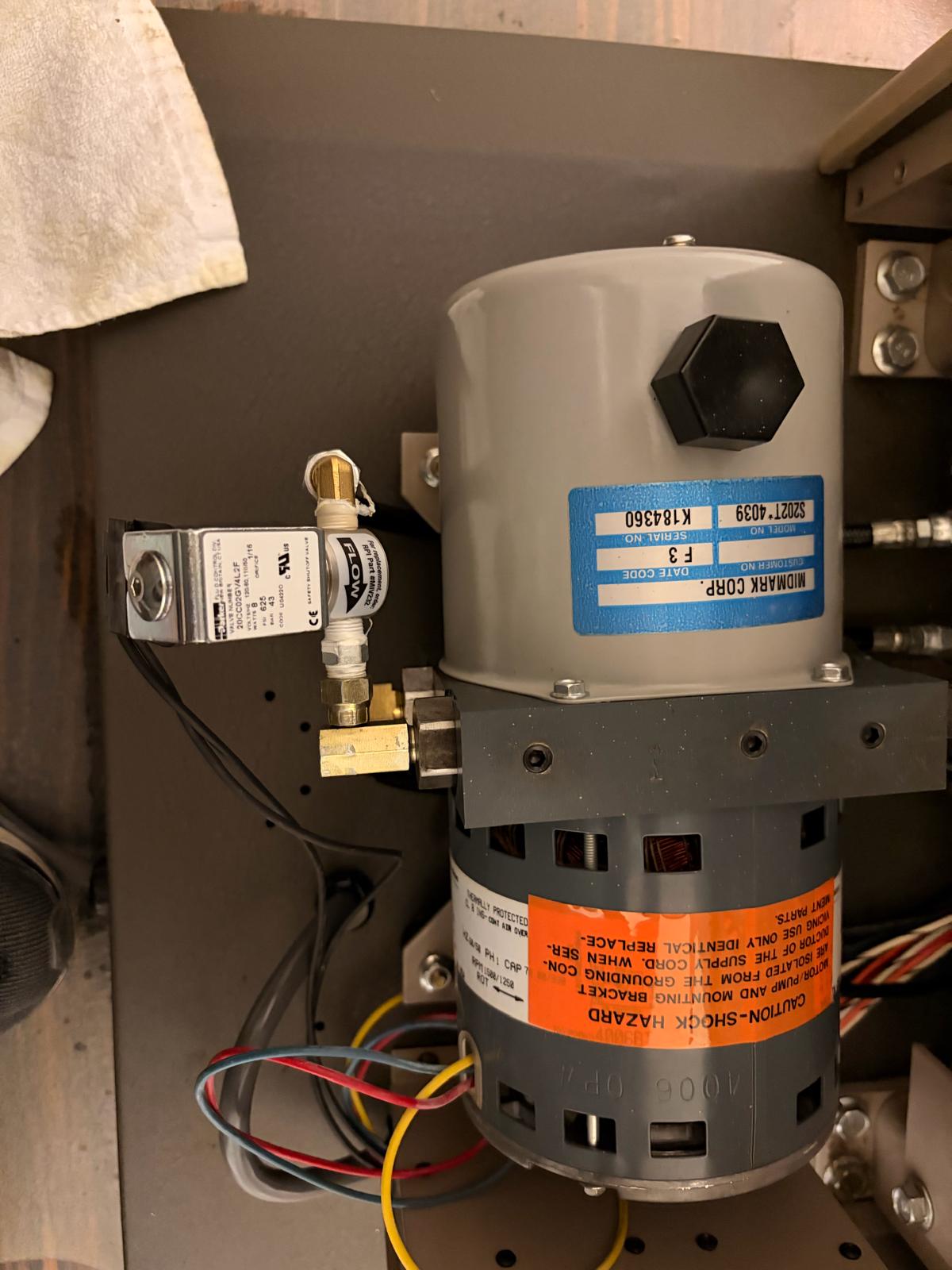
A hydraulic base
Very common. Midmark describes the Elevance chair as having a hydraulic drive system, and its parts breakdown includes ISO VG32 hydraulic oil and multiple hydraulic hoses.
Hydraulic base with electronic valve and limit control
Midmark’s valve theory explains that electrically operated solenoid valves open when energized, while throttle valves and dampers shape speed and smoothness, and pressure relief valves protect the system.
Hybrid lift designs
A dec describes the 300 chair as combining a hydraulic base with an electromechanical tilt. Flight Dental Systems also describes a hybrid lift approach for its A6 systems, with a hydraulic base plus an electromechanical back motor.
Hydraulic troubleshooting when the base won’t rise
If the symptom of Going Up failure is on a hydraulic base, follow a structured diagnostic ladder instead of guessing. This sequence isolates the problem efficiently: fluid, pump, valves, mechanical lift, and finally sensors.
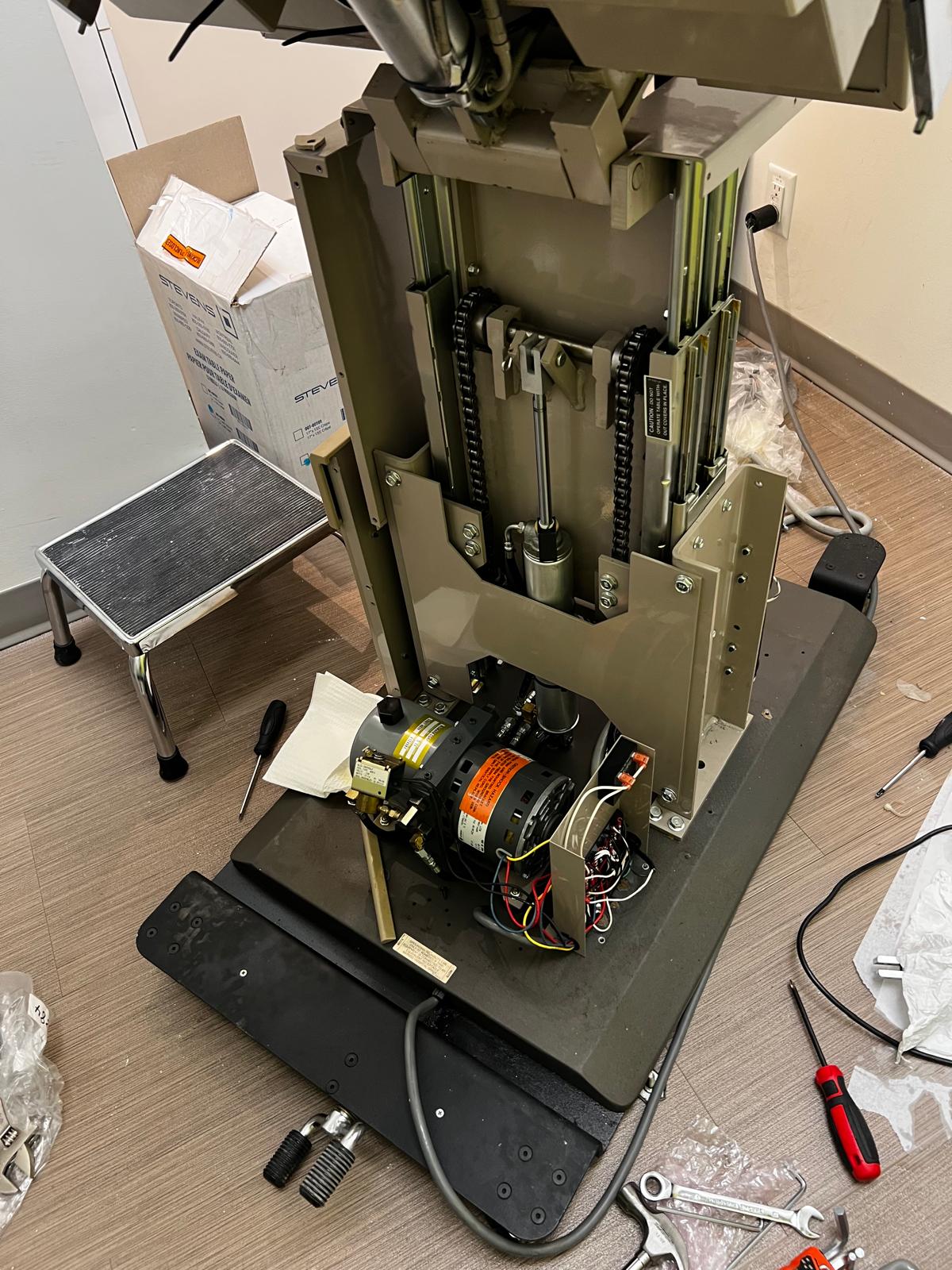
Look and listen
Press “UP.” If you hear the pump or motor but there is no lift, this typically points to a valve or solenoid not opening, an internal bypass, or low hydraulic fluid.
Midmark describes base solenoid valves as normally closed until energized. So a running pump with no lift strongly suggests a valve path issue.
Check for leaks and reservoir issues
A dec’s preventive maintenance guidance highlights checking for hydraulic fluid leaks and verifying reservoir levels. Low fluid and slow leaks are among the most common causes of lift failure.
Do not casually adjust flow valves
Midmark notes that throttle valves are factory set and normally do not require adjustment. Belmont also specifies exact oil types and controlled speed adjustments.
This means adjustments and fluid substitutions are not trial and error tasks and should not be done without proper technical guidance.
Know which components typically fail
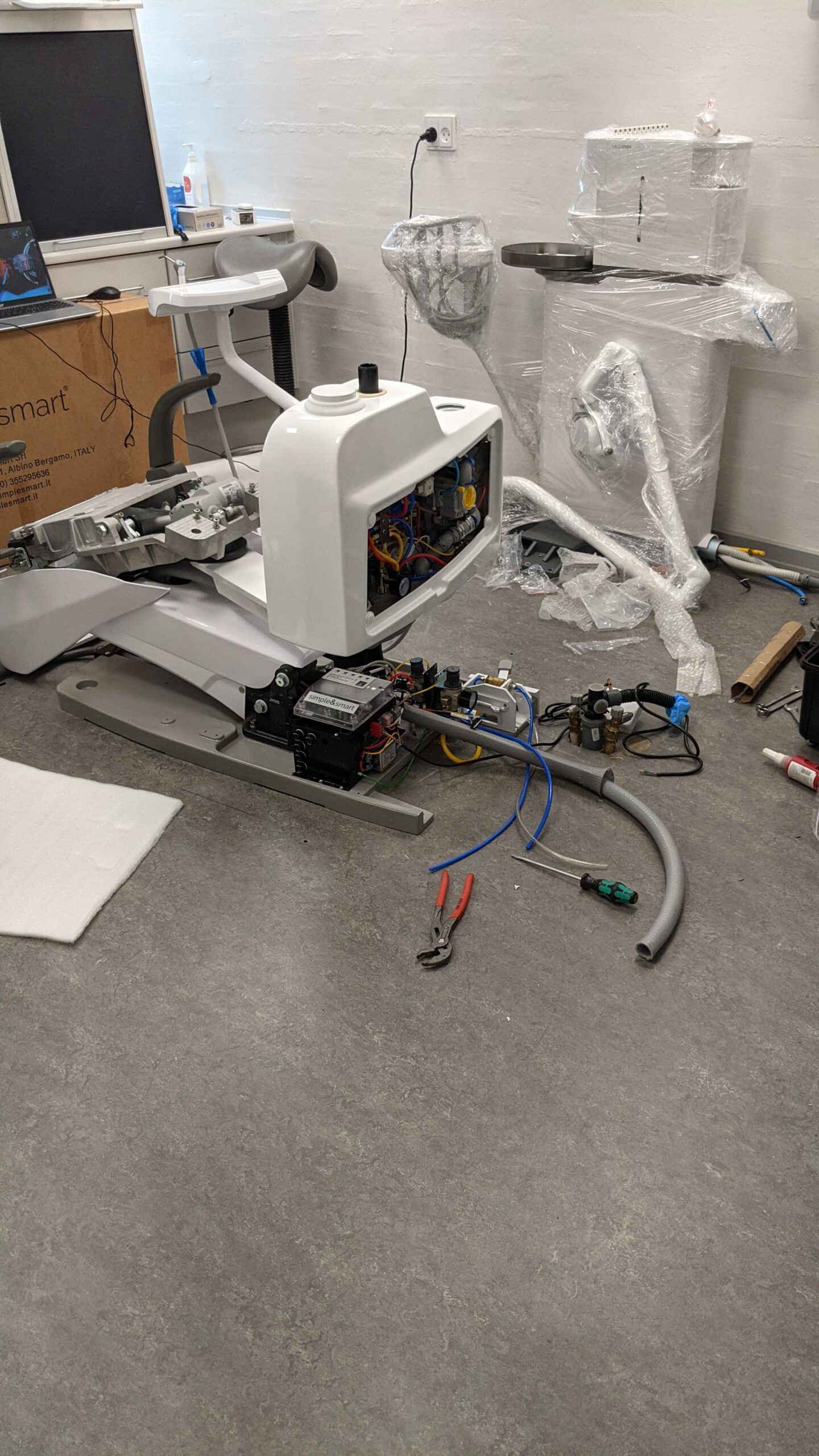
Field failures usually fall into a few categories: motor pump assemblies, solenoid valves, oil reservoir components, microswitches, control PCB, fuses, and capacitors.
These are the most common root causes behind Dental Chair Not Going Up in real clinic environments for up and down movement in dental chair
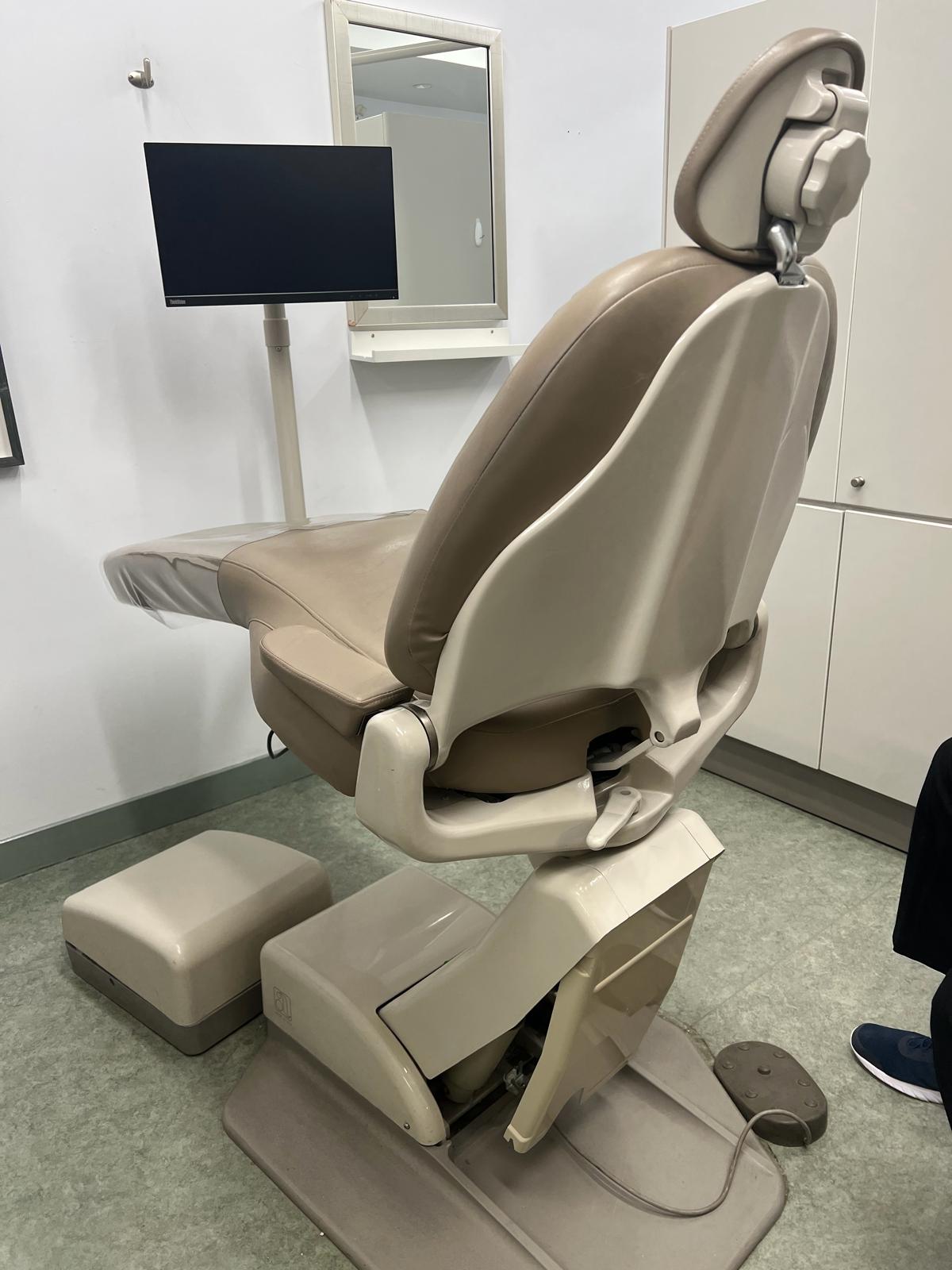
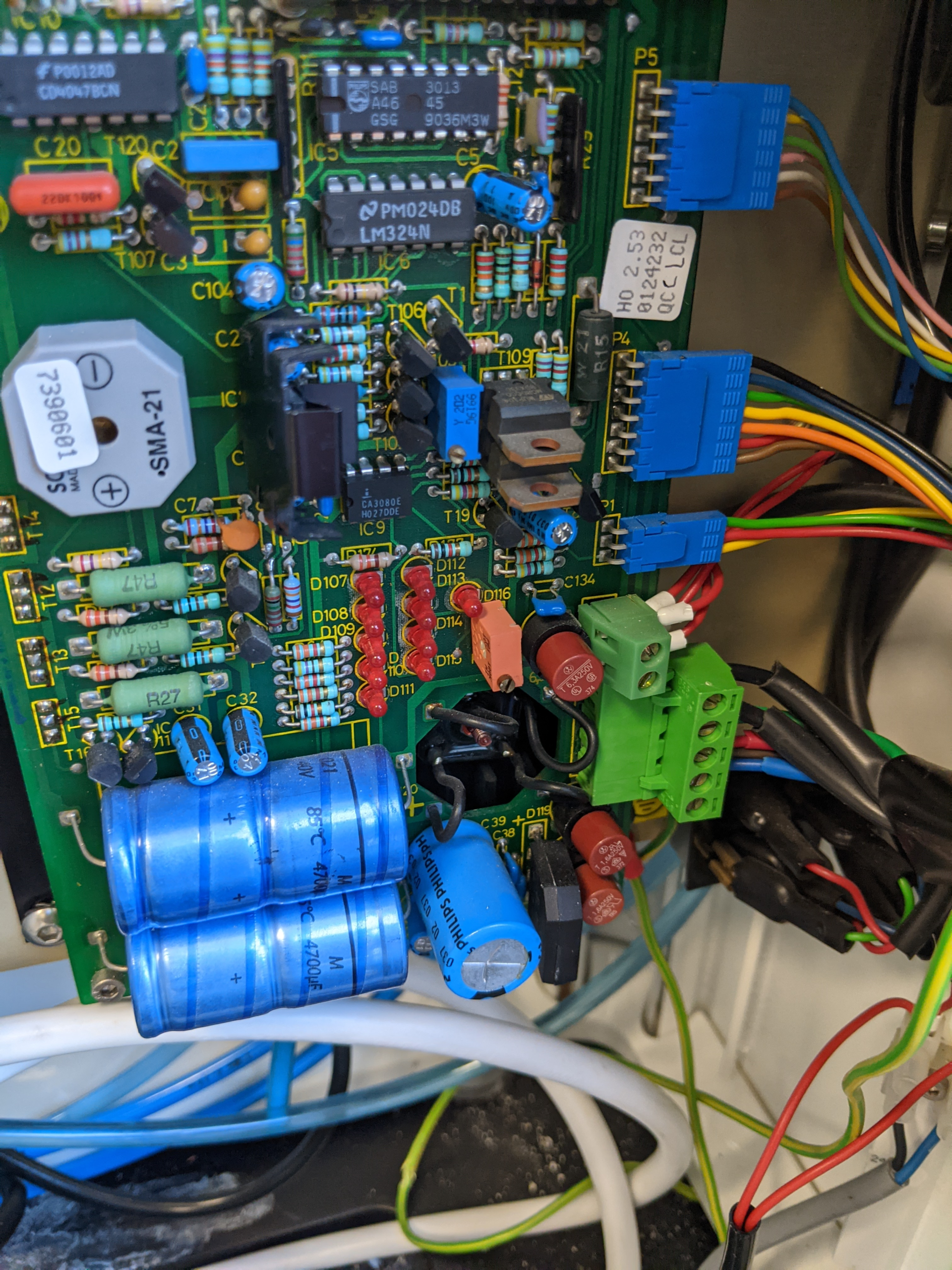
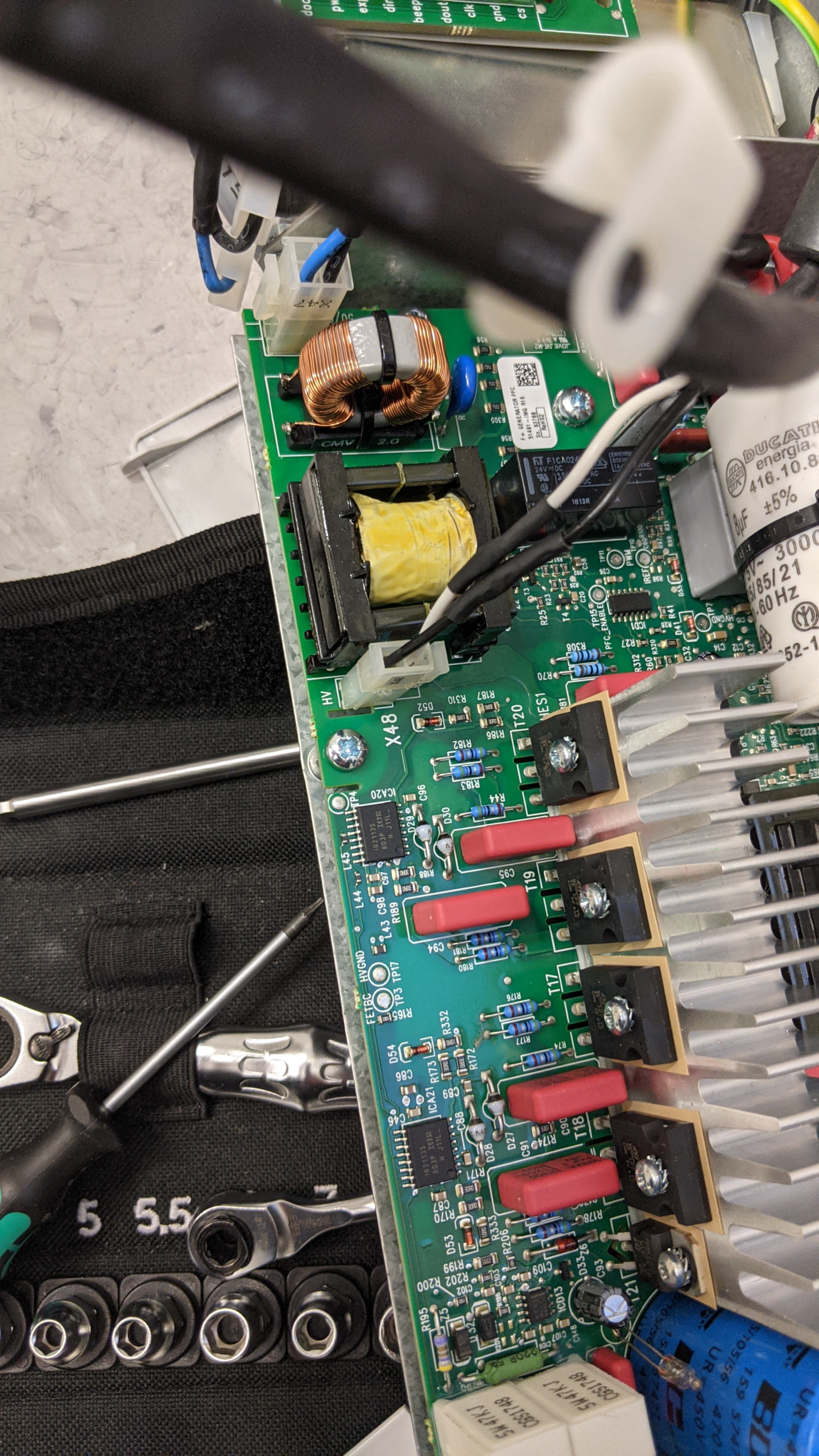
Electromechanical troubleshooting when the seat won’t rise
For electromechanical or hybrid systems, Dental Chair Not Going Up is commonly tied to limits and sensors, thermal or duty cycle protection, or actuator and motor issues.
In real service calls, the complaint is not always phrased the same way. Some teams say the chair is not lifting, some say the base will not raise, and others simply report that the seat stays down when they press up. In Vancouver clinics, BioDen often sees this symptom show up as a mix of motion loss, intermittent response, or a chair that starts upward travel and then stops.
That is why it helps to think beyond one phrase. A chair that will not rise, a seat that does not elevate, or a base that refuses to move upward can all point to the same family of problems, especially on systems that rely on sensors, motors, position feedback, or protective shutoff logic.
Repeated cycling then lockout
A chair that works for one movement, then locks out after repeated cycling, can be consistent with duty cycle limits.
In practice, staff may describe this as the chair trying to go up once, then refusing the next command. It can also feel like the unit is getting tired after several quick movements, which is why repeated stop and start motion should never be ignored.
Limit or sensor problems
Belmont documents limit modes and PCB measurement points related to potentiometers and board inputs, which is why this type of troubleshooting usually becomes technician territory.
When a sensor drifts or a position reading becomes unreliable, the upward movement can be blocked even though nothing looks broken from the outside. That is why a chair that will not go higher is not always dealing with a motor failure or a major mechanical fault.
Harness strain and routing issues
Harness strain at swivel points or under seat routing is a common mechanical reality, although exact harness routing remains model specific.
Over time, normal chair movement puts stress on wiring paths, especially where cables bend, twist, or pass through tight spaces. A chair that does not go up every time, or only responds from one control and not another, can sometimes trace back to this kind of hidden strain.
Common dental chair systems seen in Vancouver clinics
Exact market share data for dental chairs in Vancouver is not publicly standardized and varies by clinic age, budgets, and dealer relationships. This section reflects commonly encountered systems rather than a statistical ranking.
These systems are commonly seen due to strong local dealer networks, institutional adoption such as the University of British Columbia, and the widespread use of manufacturer service libraries across Canada.
Typical fix time should be treated as an estimate for on site diagnosis and repair once the correct part is available. Manufacturers rarely publish repair time standards, and Vancouver traffic and parts lead times can significantly affect scheduling.
Common dental chair failure patterns seen in Vancouver clinics
This reference summarizes commonly encountered chair systems, the failure patterns that can sit behind dental chair not going up, typical repair timing, and the parts most often involved in the field.
Midmark Elevance Dental Chair
Midmark
A-dec 300 Dental Chair
A-dec
Flight A6 Radius Package
Flight Dental Systems
Quolis Q5500
Belmont
DCI Edge Series 5 Dental Chair
DCI Edge
Planmeca Compact i Classic
Planmeca
When to call a professional and what to expect from BioDen in Vancouver
When Dental Chair Not Going Up interrupts patient care, the most important question is whether the problem is a simple control issue or a fault that requires professional diagnosis.
When it is time to call service
If the chair has no response, stops partway through movement, leaks hydraulic fluid, produces unusual motor or pump noise, or repeatedly triggers safety limits, it is time to have the system inspected by an experienced technician.
BioDen’s diagnostic-first approach
At BioDen, every service call begins with a complete on site diagnosis. For clinics located within Greater Vancouver, the initial diagnostic visit is provided at no charge. We believe clinics should understand the actual cause of the problem before committing to a repair.
Why diagnosis comes before pricing
Because the same symptom can be caused by very different failures, it is not possible to estimate repair costs based only on the chair not moving upward. One chair may only need a control adjustment, while another may require a hydraulic valve, actuator, sensor, or control board replacement.
That is why BioDen always performs a systematic diagnosis first , allowing every clinic to receive an accurate explanation and repair recommendation before any work begins.
Many problems involving foot controls, limit switches, electrical connections, or basic adjustments can often be resolved during the first appointment, while hydraulic or electronic failures may require additional parts or a follow up visit.
Learn more about BioDen dental chair repair in VancouverPreventive maintenance so Dental Chair Not Going Up does not come back
The best fix for Dental Chair Not Going Up is the one you never need. Most repeat failure are predictable and preventable with a simple maintenance rhythm and timely dental chair repair in Vancouver when needed.
In many clinics, this issue shows up as a chair that will not lift properly or a seat that stays down even when the control is pressed.
Manufacturer guidance consistently points to the same fundamentals: checking hydraulic condition, verifying stop and limit behavior, and monitoring system wear before it becomes a service call. Most situations where the chair does not go up smoothly start long before the actual failure.
A dec recommends preventive maintenance annually or after extended clinical use, including checks for stop the switches, hydraulic leaks, and reservoir levels. DCI highlights routine inspection of joints and tensioning components, while Belmont documentation reinforces how fluid type and limit adjustments directly affect long term chair performance. These are critical steps when you want to avoid a situation where the base refuses to rise or movement becomes inconsistent.
Recurring lift problems are rarely random
If Dental Chair Not Going Up keeps coming back, clinics often notice early signs like slow lifting , uneven movement, or a chair that does not respond every time the up command is pressed.
In most cases, the issue traces back to a slow leak, drifting limits, or an intermittent control input. Addressing these early prevents the situation where the chair stays down during a busy day.
That is where a documented service plan saves more than it costs by reducing repeat downtime and preventing larger failures.
Message BioDen and we’ll help you decide the next step.